
It has nothing to do with trying harder.

Welcome. You’re one of the 4.3 million reasons we’re here.
If you’ve tried at least 2 oral antidepressants as prescribed, and still haven’t found relief of your symptoms of depression, you may be one of the 4.3 million adults in the US living with treatment-resistant depression (TRD).
Depression can feel like a weight, draining energy and making it harder to feel like yourself.
If you’re not feeling better, it’s not your fault. It could mean your current treatment isn’t the right fit.
Let’s talk about it.
Ready to learn about a treatment for TRD?
Find out moreNot a real patient.




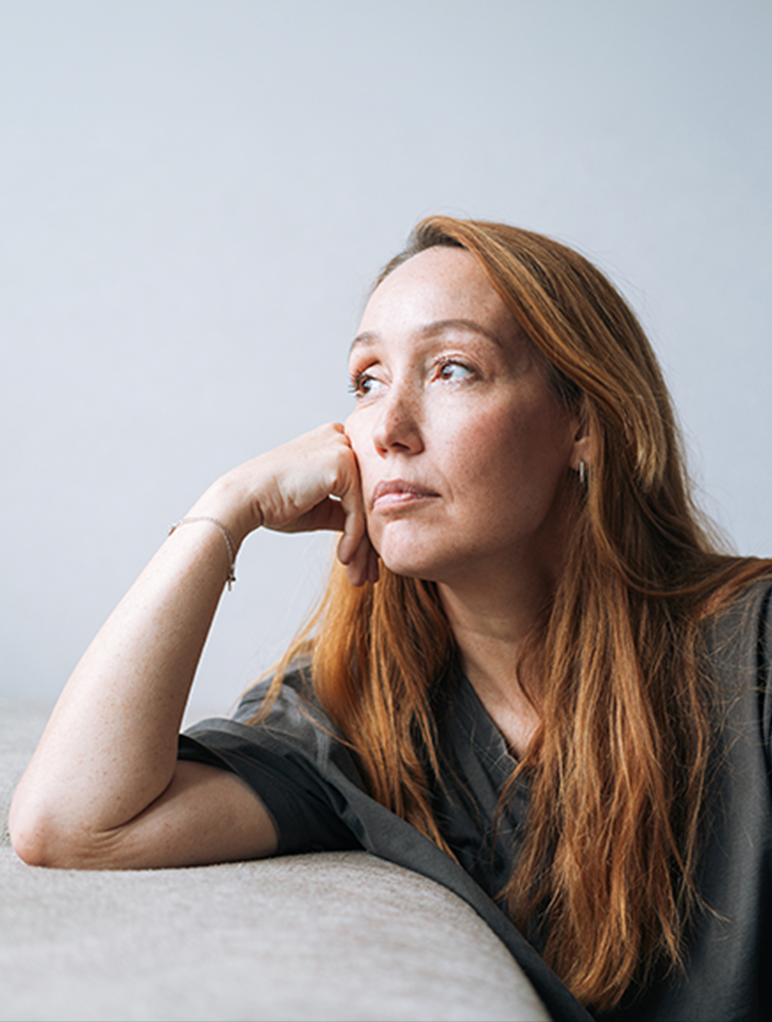
Not a real patient.





Welcome. You’re one of the 4.3 million reasons we’re here.
If you’ve tried at least 2 oral antidepressants as prescribed, and still haven’t found relief of your symptoms of depression, you may be one of the 4.3 million adults in the US living with treatment-resistant depression (TRD).
Depression can feel like a weight, draining energy and making it harder to feel like yourself.
If you’re not feeling better, it’s not your fault. It could mean your current treatment isn’t the right fit.
Let’s talk about it.
Ready to learn about a treatment for TRD?
Find out moreSwipe to learn more
Not a real patient.

REAL TALK:
Depression doesn’t always respond like you expect.It has nothing to do with trying harder.
It has nothing to do with trying harder.
Here’s the truth.
Being told to “feel better” or “snap out of it” can add a lot of pressure. But traditional antidepressants may not work well enough for some people. When this happens, it’s not a reflection of your effort. It could mean you have treatment-resistant depression (TRD).
What does TRD mean?
One definition of TRD is when someone with major depressive disorder has tried two or more antidepressants at the prescribed dose and for long enough to see if it will work, and is still experiencing symptoms of depression. It’s more common than most people realize—about 1 in 3 adults with depression don’t experience enough symptom improvement with antidepressants alone.
It’s real and has a name: TRD.
Putting a name to the experience can help explain why things haven’t changed, even when you’ve done everything right.
Ready to learn about a treatment for TRD?
Find out moreSwipe to learn more
Not a real patient.

STRAIGHT TALK:
Depression Treatment Isn't One-Size-Fits-All.Treatment can work on different pathways in the brain.
Treatment can work on different pathways in the brain.
SSRIs: a first step for many.
When you were first diagnosed with depression, you were likely prescribed a selective serotonin reuptake inhibitor (SSRI)—a medication that increases serotonin, a brain chemical linked to mood.
Depression is often described as a chemical imbalance in the brain, and SSRIs are believed to rebalance brain chemistry by raising serotonin levels.
But wait, depression doesn’t impact only one type of brain chemical.
If SSRIs aren’t working well enough for you, healthcare providers may switch to or add treatments that target other brain chemicals, such as serotonin-norepinephrine reuptake inhibitors (SNRIs) or norepinephrine-dopamine reuptake inhibitors (NDRIs). These affect the brain chemicals norepinephrine and dopamine.
Many people see some improvement. But if you still feel your depression could be better managed, it’s not just in your head. It may mean your depression requires a different approach.
Meet other chemical messengers in the brain.
While some medications focus on serotonin, norepinephrine, or dopamine, the brain also uses other chemical messengers that help regulate mood—like glutamate and GABA.
Glutamate is believed to help regulate mood, and is involved in about 90% of brain connections. GABA is another chemical messenger that may help calm brain activity and support balance in mood.
For some people, treatments that work differently may offer another option.
Ready to learn about a treatment for TRD?
Find out moreSwipe to learn more
Not a real patient.

LET’S TALK:
Start by talking to your healthcare provider.Share how you’re feeling and any depression symptoms you’re still experiencing.
Share how you’re feeling and any depression symptoms you’re still experiencing.
Here are a few questions that can help start the conversation:
- What other options are available if my current treatment hasn’t helped enough?
- How do I know if it’s time to change my treatment or add another option?
- How quickly might I see results after changing my treatment?
- Are there side effects I should consider before making a change?
Starting the conversation may be difficult, but it can be an important step toward finding the treatment that works best for you.
Ready to learn about a treatment for TRD?
Find out moreSwipe to learn more
Not a real patient.

PEP TALK:
You Deserve More Than Feeling Fine.Because just getting by doesn’t have to be the goal.
Because just getting by doesn’t have to be the goal.
Scroll down to learn more
Not a real patient.
Welcome. You’re one of the 4.3 million reasons we’re here.
If you’ve tried at least 2 oral antidepressants as prescribed, and still haven’t found relief of your symptoms of depression, you may be one of the 4.3 million adults in the US living with treatment-resistant depression (TRD).
Depression can feel like a weight, draining energy and making it harder to feel like yourself.
If you’re not feeling better, it’s not your fault. It could mean your current treatment isn’t the right fit.
Let’s talk about it.
Ready to learn about a treatment for TRD?
Find out moreSwipe to learn more
Not a real patient.
REAL TALK:
Depression doesn’t always respond like you expect.It has nothing to do with trying harder.
It has nothing to do with trying harder.
Here’s the truth.
Being told to “feel better” or “snap out of it” can add a lot of pressure. But traditional antidepressants may not work well enough for some people. When this happens, it’s not a reflection of your effort. It could mean you have treatment-resistant depression (TRD).
What does TRD mean?
One definition of TRD is when someone with major depressive disorder has tried two or more antidepressants at the prescribed dose and for long enough to see if it will work, and is still experiencing symptoms of depression. It’s more common than most people realize—about 1 in 3 adults with depression don’t experience enough symptom improvement with antidepressants alone.
It’s real and has a name: TRD.
Putting a name to the experience can help explain why things haven’t changed, even when you’ve done everything right.
Ready to learn about a treatment for TRD?
Find out moreSwipe to learn more
Not a real patient.
STRAIGHT TALK:
Depression Treatment Isn't One-Size-Fits-All.Treatment can work on different pathways in the brain.
Treatment can work on different pathways in the brain.
SSRIs: a first step for many.
When you were first diagnosed with depression, you were likely prescribed a selective serotonin reuptake inhibitor (SSRI)—a medication that increases serotonin, a brain chemical linked to mood.
Depression is often described as a chemical imbalance in the brain, and SSRIs are believed to rebalance brain chemistry by raising serotonin levels.
But wait, depression doesn’t impact only one type of brain chemical.
If SSRIs aren’t working well enough for you, healthcare providers may switch to or add treatments that target other brain chemicals, such as serotonin-norepinephrine reuptake inhibitors (SNRIs) or norepinephrine-dopamine reuptake inhibitors (NDRIs). These affect the brain chemicals norepinephrine and dopamine.
Many people see some improvement. But if you still feel your depression could be better managed, it’s not just in your head. It may mean your depression requires a different approach.
Meet other chemical messengers in the brain.
While some medications focus on serotonin, norepinephrine, or dopamine, the brain also uses other chemical messengers that help regulate mood—like glutamate and GABA.
Glutamate is believed to help regulate mood, and is involved in about 90% of brain connections. GABA is another chemical messenger that may help calm brain activity and support balance in mood.
For some people, treatments that work differently may offer another option.
Ready to learn about a treatment for TRD?
Find out moreSwipe to learn more
Not a real patient.
LET’S TALK:
Start by talking to your healthcare provider.Share how you’re feeling and any depression symptoms you’re still experiencing.
Share how you’re feeling and any depression symptoms you’re still experiencing.
Here are a few questions that can help start the conversation:
- What other options are available if my current treatment hasn’t helped enough?
- How do I know if it’s time to change my treatment or add another option?
- How quickly might I see results after changing my treatment?
- Are there side effects I should consider before making a change?
Starting the conversation may be difficult, but it can be an important step toward finding the treatment that works best for you.
Ready to learn about a treatment for TRD?
Find out moreSwipe to learn more
Not a real patient.
PEP TALK:
You Deserve More Than Feeling Fine.Because just getting by doesn’t have to be the goal.
Because just getting by doesn’t have to be the goal.
Scroll down to learn more
Not a real patient.

Not a real patient.